
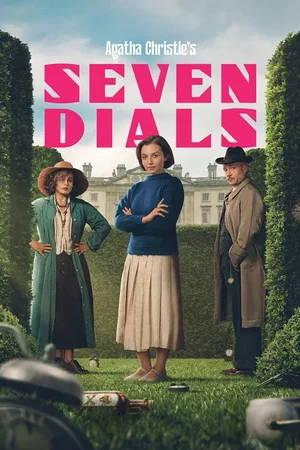
Where was Agatha Christie's Seven Dials filmed
Agatha Christie's Seven Dials
Year: 2023
Country: Spain, United Kingdom
The film was shot in a captivating adaptation of a classic crime novel, presenting a vibrant tale set in 1925 England. It intricately follows the journey of a spirited young aristocrat who unexpectedly finds herself embroiled in a series of mysterious events and a secret society. Her transformation into an amateur sleuth drives the narrative, leading her through grand country estates, bustling cityscapes, and the dramatic landscapes of Spain. The series masterfully blends elements of mystery and adventure, requiring the protagonist to uncover truths hidden beneath a veneer of aristocratic society, all while navigating perilous encounters and deciphering cryptic clues. The production effectively captures the elegance and intrigue of the era, providing a compelling and suspenseful viewing experience.
If you have suggestions for improving information about locations, you can make them using the editing function.
Locations
1925 London Cemetery
In movie
Scene where portrays a 1925 London setting, with Bundle and Jimmy visiting this historic Victorian garden cemetery, spanning over 45 acres with numerous monuments.
Real
Scene was shot is a beautifully preserved Victorian garden cemetery established in 1839, situated in Bristol. Spanning more than 45 acres, it is a serene landscape featuring a rich array of historic monuments, diverse plant life, and tranquil walking paths. The cemetery is recognized for its architectural significance and as a natural habitat, offering both historical interest and a peaceful retreat.
Bullring of the Royal Cavalry
In movie
Scene where the fateful scene takes place, showing the historical importance and grandeur of one of Spain's oldest and most significant bullrings.
Real
Scene was shot is a monumental structure dating back to 1785, renowned for its architectural beauty and historical significance in bullfighting culture. Its unique circular design and sandy arena are framed by a double arcaded grandstand, providing a magnificent backdrop. This site is not just an arena but a museum dedicated to the art and history of horsemanship and bullfighting, deeply embedded in Spanish tradition.
Ronnie's Office
In movie
Scene where Ronnie's office was filmed, showcasing the early 20th-century architecture of the university's Main College complex on the Cathays Park campus.
Real
Scene was shot is a distinctive part of the Cardiff University's Main College complex, built in the early 20th century. Located within the impressive Cathays Park campus, the building exhibits classical architectural elements typical of academic institutions from that era. Its design incorporates robust stone facades and detailed craftsmanship, reflecting the period's grandeur in public and educational buildings.
The Chimneys House
In movie
Scene where used for the stately exterior and opulent interiors of the Chimneys residence, including its magnificent Great Staircase and the beautifully preserved 18th-century Great Dining Room, featured prominently throughout the series.
Real
Scene was shot is a grand country house steeped in history, originating from the 17th century as the seat of the Duke of Beaufort. Surrounded by extensive, meticulously maintained gardens and parkland, the estate exemplifies classic English aristocratic architecture. Its interiors boast period features, including a remarkable staircase and dining rooms that retain their original charm, offering an authentic glimpse into historical grandeur.
Train Scenic View
In movie
Scene where features a jaw-dropping scenic view during a train journey, looking like something out of a Studio Ghibli film, spanning the Mawddach Estuary.
Real
Scene was shot is an iconic Victorian-era railway viaduct that dramatically spans the Mawddach Estuary in Gwynedd, Wales. Commissioned in 1867, it is one of Britain's longest timber viaducts, also featuring iron elements and a dedicated pedestrian walkway. This distinctive landmark of the Welsh coast provides breathtaking views of the estuary and surrounding mountains, making it a prominent feature in the landscape.